Farmers Market Girly Embroidery Design
A Designer’s Real-World Review Before Your First Stitch
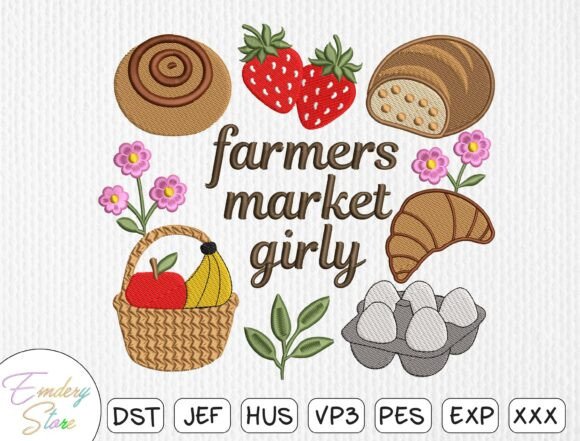
As an embroidery designer who’s developed over 300 machine embroidery designs for gift shops, Etsy sellers, and baby product creators, I test every file like it’s going straight into a customer’s hands—no exceptions. That’s exactly how I approached the Farmers Market Girly Embroidery Design. This isn’t just another floral script; it’s a mood, a memory, a tiny invitation to slow down and savor handmade charm. From the first glance at the digital embroidery file, I felt its warmth: strawberries, crusty bread, blooming florals—all wrapped in soft curves and gentle spacing. It reads sweet but not saccharine, playful but never childish, romantic without leaning into vintage cliché. It’s seasonal enough to feel fresh in spring or summer, yet classic enough to hold up year after year on a nursery wall or kitchen shelf.
Where This Design Truly Shines
The Farmers Market Girly Embroidery Design excels where emotional resonance meets practical application—especially in personalized gift contexts. For baby embroidery, it’s ideal on organic cotton swaddle blankets or muslin burp cloths: the softness of the design mirrors new parenthood’s tenderness. On linen pillow covers or embroidered towels, it adds quiet elegance to House Home collections—think farmhouse kitchens, cottagecore nurseries, or wedding keepsakes like “first kitchen” aprons for newlyweds. I’ve already sketched mockups for custom tote bags sold at craft fairs (great for farmers market vendors themselves!), and as a monogrammed accent on canvas lunch sacks for preschoolers—where the strawberry and bread motifs spark joyful recognition.
Etsy sellers will appreciate how naturally this design supports storytelling in listings. Pair it with a printable mockup showing the design stitched on a cream tea towel beside a mason jar of wildflowers—and watch engagement rise. Wedding gift designers can layer it subtly on ivory linen napkins or stitch it onto a hand-stitched quilt square for a “farm-to-table” couple. Small shop owners using it for custom orders will find customers consistently describe it as “just right”—not too busy, not too plain, instantly recognizable as handmade.
Smart Placement Matters—Here’s Where to Pause
Like any thoughtful embroidery file, the Farmers Market Girly Embroidery Design rewards intentionality. Its delicate stems and small fruit details demand attention when placed on textured fabric—like terry cloth towels or thick woven blankets—where stitches can sink or blur. Avoid stretching it across curved surfaces (think rounded ceramic mugs or contoured baby onesies) unless you’re using specialized hoops and stabilizer techniques. The phrase “farmers market g” suggests lettering is part of the charm—but check your file: if the text is under 8mm tall, it may lose clarity on dense weaves or dark fabric. And while the design feels light and airy, confirm its stitch density before stitching on stretchy baby clothes—excess density can stiffen seams and irritate sensitive skin.
Why Customers Trust What They Can Feel
This design elevates perceived value because it *feels* intentional—not mass-produced. When stitched cleanly on a heavyweight linen pillow cover, the contrast between the crisp thread colors and the natural fabric grain signals care. That translates directly to customer trust: buyers assume higher craftsmanship, fair pricing, and authenticity. In product photography, the Farmers Market Girly Embroidery Design performs beautifully—it’s photogenic without needing heavy editing. Soft shadows, natural light, and a simple rustic background let the strawberries and blossoms speak for themselves. That visual clarity boosts buyer engagement, especially for digital-first shoppers scrolling Etsy or Instagram feeds.
Practical Notes Every Embroiderer Should Run Through
Before stitching your first finished product, treat this file like a trusted collaborator—not just data:
- Test on scrap fabric first—especially if you’re pairing it with a new thread palette or unfamiliar stabilizer.
- Check thread color contrast against both light and dark fabric mockups. Pastel pinks or sage greens pop on ivory, but may fade on navy unless you adjust saturation or add underlay.
- Confirm hoop size compatibility. If your machine has a 4x4” limit, verify the full design fits—or plan for re-hooping with precise registration marks.
- Review stitch density. If the file feels overly dense in the floral clusters, consider reducing fill density by 5–10% for breathable fabrics like cotton voile or baby blankets.
- Use proper stabilizer: lightweight cutaway for knits, tear-away for stable wovens, and fusible + tear-away for towels to prevent puckering.
- Compare light and dark fabric mockups side-by-side—not just on screen, but stitched. Some subtle stem lines may vanish on black linen without a white underlay.
- Inspect small details post-stitch: run a finger over the strawberry seeds or bread crust texture. If they feel flat or fused, your top tension may need adjusting.
- Confirm commercial licensing before selling finished products. Since this is marketed as a digital embroidery file for personalized gift use, ensure your license permits resale of physical items—many House Home and Embroidery files do, but always verify.
A Final Thought for Makers Who Sell Meaning
The Farmers Market Girly Embroidery Design doesn’t just decorate—it connects. It whispers “homegrown,” “hand-picked,” “made with care.” That’s why it works so well for baby embroidery, wedding gifts, and small shop products: it carries warmth without words. As a designer, I don’t just ask “Will it stitch?”—I ask “Will it be kept?” This one? Yes. Tucked in a baby’s memory box, hung in a first apartment kitchen, or gifted to a friend who loves farmers markets more than malls. That’s the quiet power of a well-chosen machine embroidery design. Stitch it thoughtfully, sell it honestly, and let the strawberries do the rest.