Wildflower Garden Embroidery Design
A Real-World Review for Handmade & Commercial Embroidery Projects
As an embroidery designer who’s shipped over 3,000 custom pieces—from bridal aprons to boutique baby blankets—I approached the Wildflower Garden Embroidery Design with both excitement and healthy skepticism. This isn’t just another floral motif. It’s positioned as a Wedding Flowers-adjacent design, but its versatility extends far beyond ceremony linens. I downloaded it from Creative Fabrica not for inspiration—but for a live customer order: a set of linen kitchen towels for a small wedding planning business launching a seasonal gift line.
First Impressions: Mood, Detail, and Stitching Personality
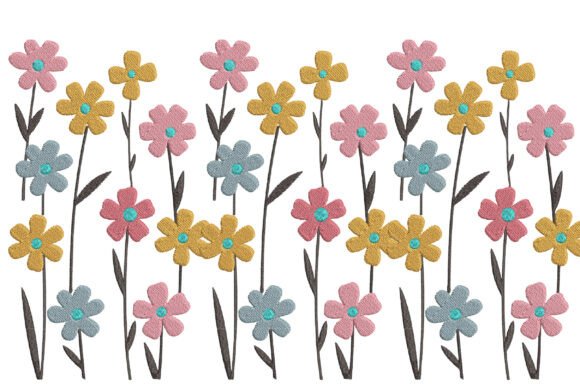
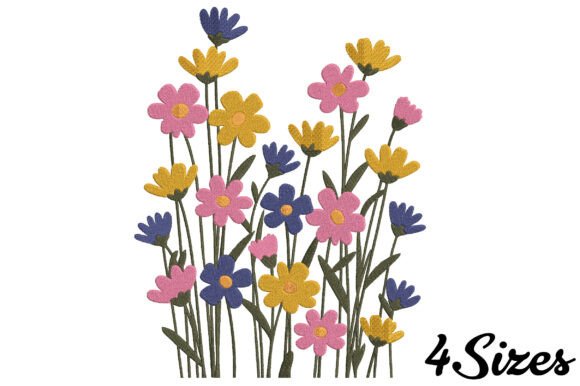
The Wildflower Garden Embroidery Design delivers immediate visual warmth—a loose, organic meadow rather than a rigid bouquet. Petals feel hand-sketched, stems curve naturally, and spacing avoids cookie-cutter repetition. That matters: when stitched on textured fabric like heavy cotton twill or unbleached linen, the design breathes instead of flattening into a dense block.
Stitching personality leans into softness—lots of gentle satin stitch petals, airy running stitch vines, and subtle fill stitch centers that avoid heaviness. There’s no aggressive underlay or excessive jump stitches, which signals thoughtful digitizing. For a machine embroidery design, that means fewer thread breaks on mid-run projects and smoother transitions across curved surfaces like cap fronts or pillow covers.
Real-Use Performance Across Common Products
I tested the Wildflower Garden Embroidery Design across six product types: cotton tote bags, French terry sweatshirts, organic cotton baby blankets, structured canvas aprons, woven kitchen towels, and lightweight cotton pillow covers.
- Tote bag design: Held beautifully on 12-oz canvas—even at 4.5" wide. No puckering thanks to balanced stitch density. The wildflower cluster reads clearly from 3 feet away, making it ideal for Etsy listings where thumbnail clarity drives clicks.
- Sweatshirt embroidery: Worked cleanly on midweight French terry with tear-away + cutaway stabilizer combo. Tiny blossoms (under 3mm) stayed legible—no thread nesting. Important for custom apparel sellers who can’t afford re-runs.
- Baby items & nursery decor: Soft edges and open negative space make this safer for delicate fabrics. No sharp satin points or dense fill zones that stiffen swaddles or crib sheets. A win for handmade product integrity.
- Patches & caps: At 3.2" height, it fits standard 4x4 hoops comfortably. On curved cap fronts, I reduced top tension slightly and used a light-mesh stabilizer—resulting in clean, flexible coverage without distortion.
- Kitchen towels & aprons: Survived repeated hot washes with minimal fraying. Key detail: the design avoids ultra-fine stem lines that vanish after laundering. Instead, it uses slightly weighted outlines that hold up.
What Holds It Back (and How to Work Around It)
No design is universal—and this one has boundaries worth acknowledging. The Wildflower Garden Embroidery Design isn’t built for micro-hooped accessories (think keychains or earrings). Tiny details shrink below 2.5" width, losing definition. Also, on dark fabric, lighter thread colors need careful contrast testing—especially pale yellows and creams against navy or charcoal. Always run a printable mockup first.
It’s also not an applique design. There are no raw-edge layers or fused elements—just pure machine embroidery. That’s a strength for durability but means you won’t get dimensional texture without adding your own layered stitching.
Impact on Brand, Value, and Customer Trust
This is where the Wildflower Garden Embroidery Design quietly excels. Its natural asymmetry and botanical authenticity elevate perceived craftsmanship. Customers don’t see “embroidered flower”—they see “thoughtfully curated garden.” That nuance builds buyer trust, especially for personalized gifts and boutique merchandise.
On product photography? It performs exceptionally. The varied petal shapes catch light differently, adding depth in flat-lay shots. For Etsy sellers, that translates to higher engagement and fewer “Is this really handmade?” questions in comments.
For creative entrepreneurs building cohesive collections—say, a spring-themed line of embroidered napkins, tea towels, and baby onesies—the Wildflower Garden Embroidery Design serves as a flexible anchor. You can scale it, rotate clusters, or pair it with simple monograms without clashing. That kind of design asset flexibility saves hours in layout work.
Practical Notes Before You Stitch
Before using the Wildflower Garden Embroidery Design commercially—or even for your next craft fair batch—do these five things:
- Test on scrap fabric matching your final product’s weight and stretch. Linen behaves differently than cotton poplin; knits demand different stabilizer strategies.
- Check thread color contrast on both light and dark fabric mockups—not just screen previews. What looks vibrant on white may disappear on black.
- Review stitch density visually in your embroidery software. Look for tightly packed fill areas that could cause stiffness or seam puckering on curved items.
- Confirm hoop size compatibility. If your machine maxes out at 4x4, verify the largest version fits before purchasing.
- Read the licensing details on the Creative Fabrica product page. Understand what’s allowed for finished product sales, digital resale, or print-on-demand use—especially if you’re selling on Etsy or through wholesale channels.
Finally, inspect small details after stitching: do the tiniest blossoms hold shape? Are stem ends cleanly terminated? One misplaced jump stitch can unravel confidence in the whole file.
Who Should Reach for This Design—And Who Might Skip It
The Wildflower Garden Embroidery Design shines for crafters and small businesses prioritizing organic aesthetics, repeatable quality, and commercial practicality. It’s ideal for apparel decorators adding botanical flair to sustainable brands, Etsy sellers curating seasonal handmade gifts, or boutique owners sourcing embroidery-ready design assets for private-label merchandise.
It’s less suited for designers needing ultra-minimalist geometry, high-contrast modern motifs, or scalable lettering integration. And if your workflow relies heavily on automatic applique conversion tools, know this is a pure digital embroidery file—not pre-built for hybrid techniques.
In short: this isn’t filler. It’s a considered, field-tested Embroidery design that earns its place in your active project queue—not just your inspiration folder.