Floral Butterfly with Ribbon Elegance
A Graceful Design That Feels Like a Hand-Drawn Sketch
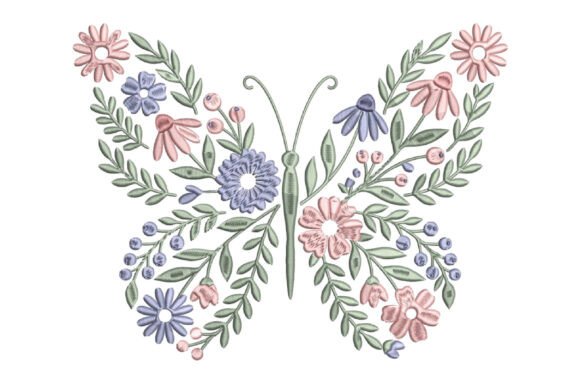
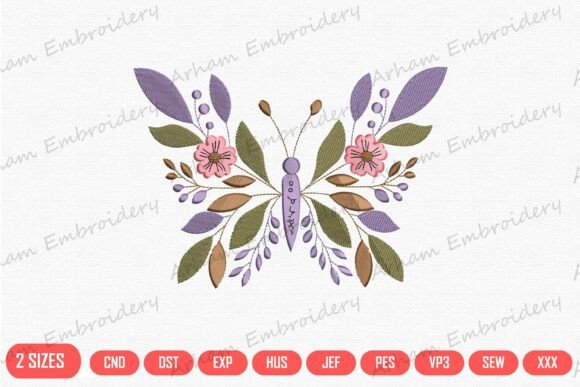
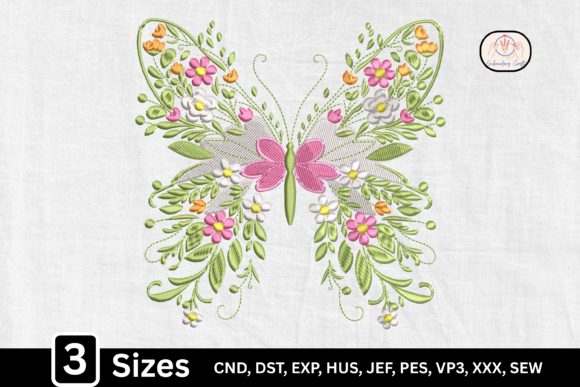
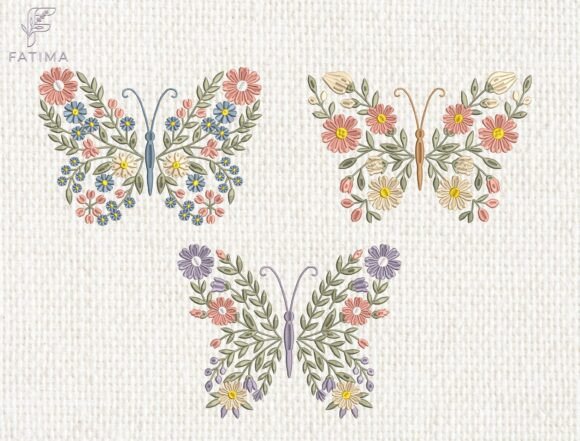
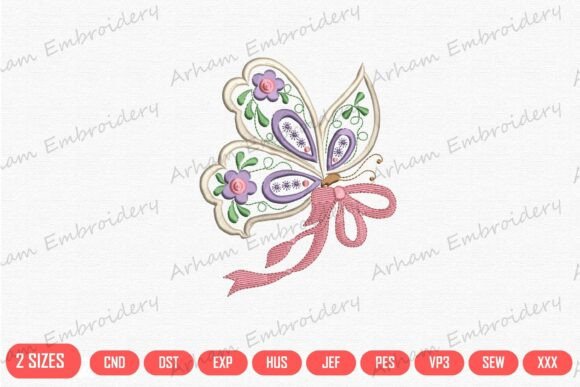
When I first opened Floral Butterfly with Ribbon Elegance, I didn’t just see another bug-themed embroidery file—I saw movement. The wings aren’t rigid or symmetrical in that overly digital way; they tilt slightly, as if caught mid-glide. The ribbon curls with soft tension, and the tiny botanical accents—daisies, sprigs of lavender—nestle into the curves like they belong there. As an embroidery designer who’s stitched hundreds of insect motifs, I appreciate how this design avoids cliché. It doesn’t lean into cartoonish charm or hyper-realism. Instead, it occupies that sweet spot between illustration and stitchable elegance—a rare balance in the Bugs Insects category.
How It Stitches: Flow Over Fuss
In real-world testing on cotton twill tote bags and medium-weight linen aprons, Floral Butterfly with Ribbon Elegance behaved predictably but thoughtfully. The satin stitch wings hold crisp edges without excessive density, and the ribbon uses a gentle blend of satin and fill stitch—just enough texture to read as fabric, not plastic. I noticed no skipped stitches or thread breaks, even at moderate speeds (750–850 SPM) on my commercial machine. That said, the floral clusters near the wingtips are delicate. On stretchy fabric like jersey sweatshirts, I added light cutaway stabilizer underneath *and* a tear-away topper—especially where the smallest blossoms sit. Without that, the running-stitch stems lost definition.
Fits Naturally Into Real Product Lines
This isn’t a design that shouts for attention—it invites closer looking. That makes it ideal for products where subtlety builds value: baby blankets (stitched on organic cotton muslin), kitchen towels (in ecru thread on indigo-dyed linen), pillow covers (as a single focal point centered on the front), and nursery wall hangings. I also used it on a structured cotton cap—hooped with a curved cap frame—and the ribbon drape translated surprisingly well across the dome. For Etsy sellers, it adds quiet sophistication to listings: think “hand-embroidered linen tea towel” rather than “butterfly towel.” It supports brand consistency when paired with other botanical or ribbon-accented designs from your Creative Fabrica embroidery library.
Where It Shines—and Where It Needs Care
- Tote bag design: Works beautifully at 3.5"–4.5" width. The ribbon flows with the drape of canvas, and the fill stitch holds up to daily use.
- Sweatshirt embroidery: Best on midweight fleece or French terry—not thin, low-pile fabrics. Test thread contrast carefully: pale mint or heather gray thread reads softly against charcoal, while gold metallic pops on cream.
- Embroidered patch: Cleanly digitized for peel-and-stick backing. The wing outlines stay sharp after heat-sealing, and the ribbon’s subtle gradients don’t blur.
- Baby items: Stitch density is moderate—not too heavy for delicate skin contact. Avoid dense fill areas directly over seams on onesies.
- Dark fabric: The design includes generous underlay, so it anchors well. Still, preview your mockup in both light and dark modes before finalizing thread colors.
What It Adds to Your Handmade Product Beyond Stitching
Floral Butterfly with Ribbon Elegance elevates perceived value—not through complexity, but through intentionality. Customers notice the flow of the ribbon, the spacing between petals, the way the butterfly tilts toward the viewer. That translates directly to higher-priced handmade goods, stronger product photography (it photographs cleanly without harsh shadows), and repeat engagement—especially among buyers who curate thoughtful, nature-infused homes. For craft fair vendors, it’s a conversation starter: “Is that hand-drawn?” Yes—and it feels that way, even though it’s a precise digital embroidery file.
Practical Notes Before You Stitch
Before committing to a customer order, always:
- Run a test on scrap fabric matching your final substrate—especially for curved surfaces like caps or layered items like double-sided pillow covers.
- Review stitch density visually in your embroidery software. Areas where ribbon meets wing have slightly higher density; confirm it won’t cause puckering on lightweight linens.
- Check hoop size requirements. This design fits comfortably in a 4x4 hoop at standard scale—but if resizing beyond 120%, verify clearance on your machine arm.
- Compare thread color options across light and dark fabric mockups. The botanical elements benefit from tonal variation—try two shades of green for stem and leaf, for example.
- Inspect small details post-stitch: the tip of the ribbon, the center of each flower, and the antennae. A quick trim with micro-scissors restores clarity if fibers fuzz.
- Double-check licensing on the Creative Fabrica product page—especially if you plan to sell finished items commercially or include it in printable mockups for digital product listings.
Final Thoughts for Creative Entrepreneurs
If you’re building a cohesive line of handmade goods—whether for Etsy, local boutiques, or seasonal gift markets—Floral Butterfly with Ribbon Elegance is more than a decorative motif. It’s a design asset that bridges aesthetics and function. It doesn’t overwhelm a garment or accessory; it complements it. It reads as intentional, not incidental. And in a market saturated with generic butterflies and clip-art florals, that distinction matters—for buyer trust, for your brand voice, and for the quiet confidence that comes from offering something truly stitched with care. It’s the kind of machine embroidery design that makes customers pause, lean in, and ask, “Did you make this yourself?”—which, of course, you did.